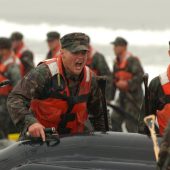
Drones Will Change Navy SEAL Missions, Not Eliminate Navy SEALs
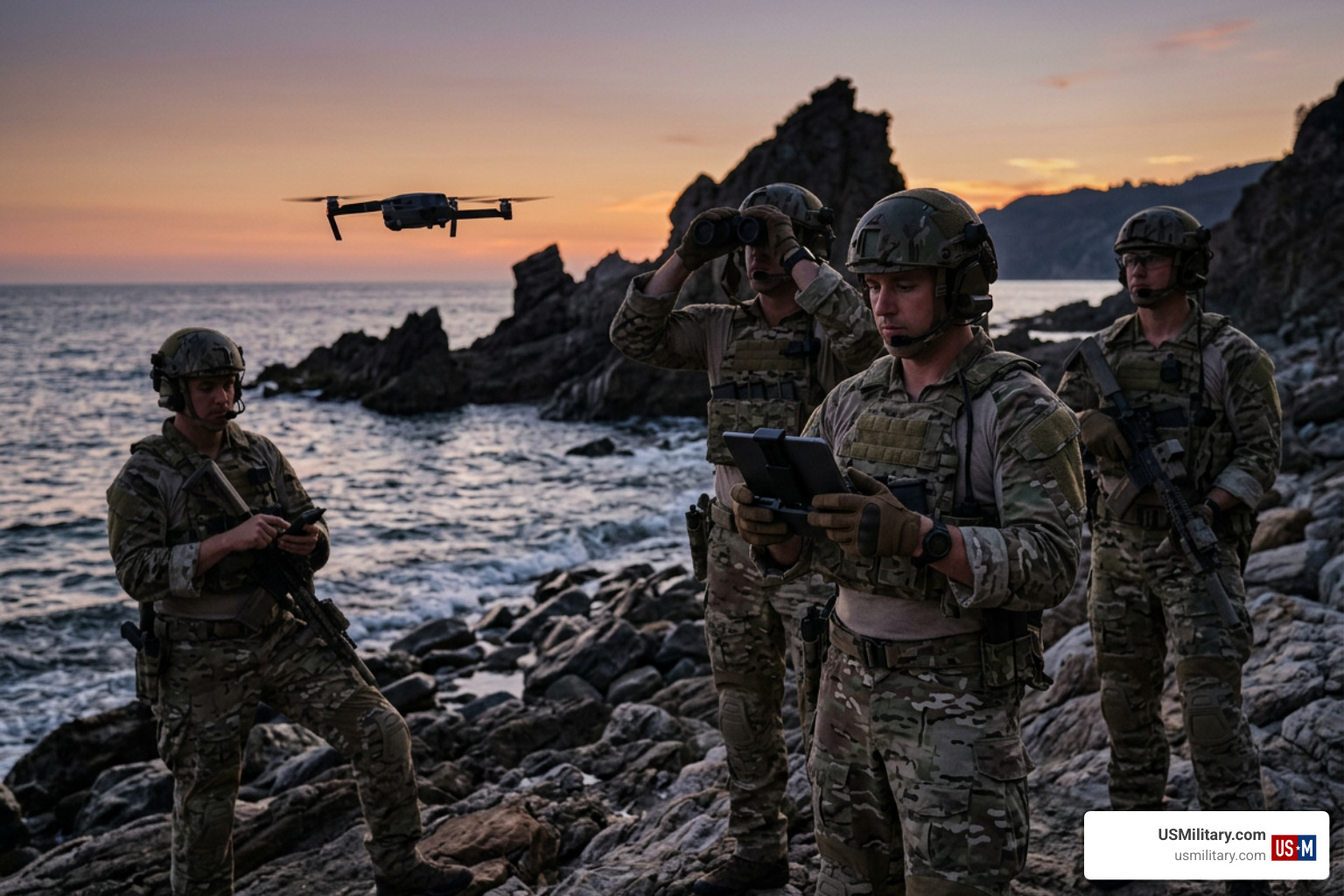
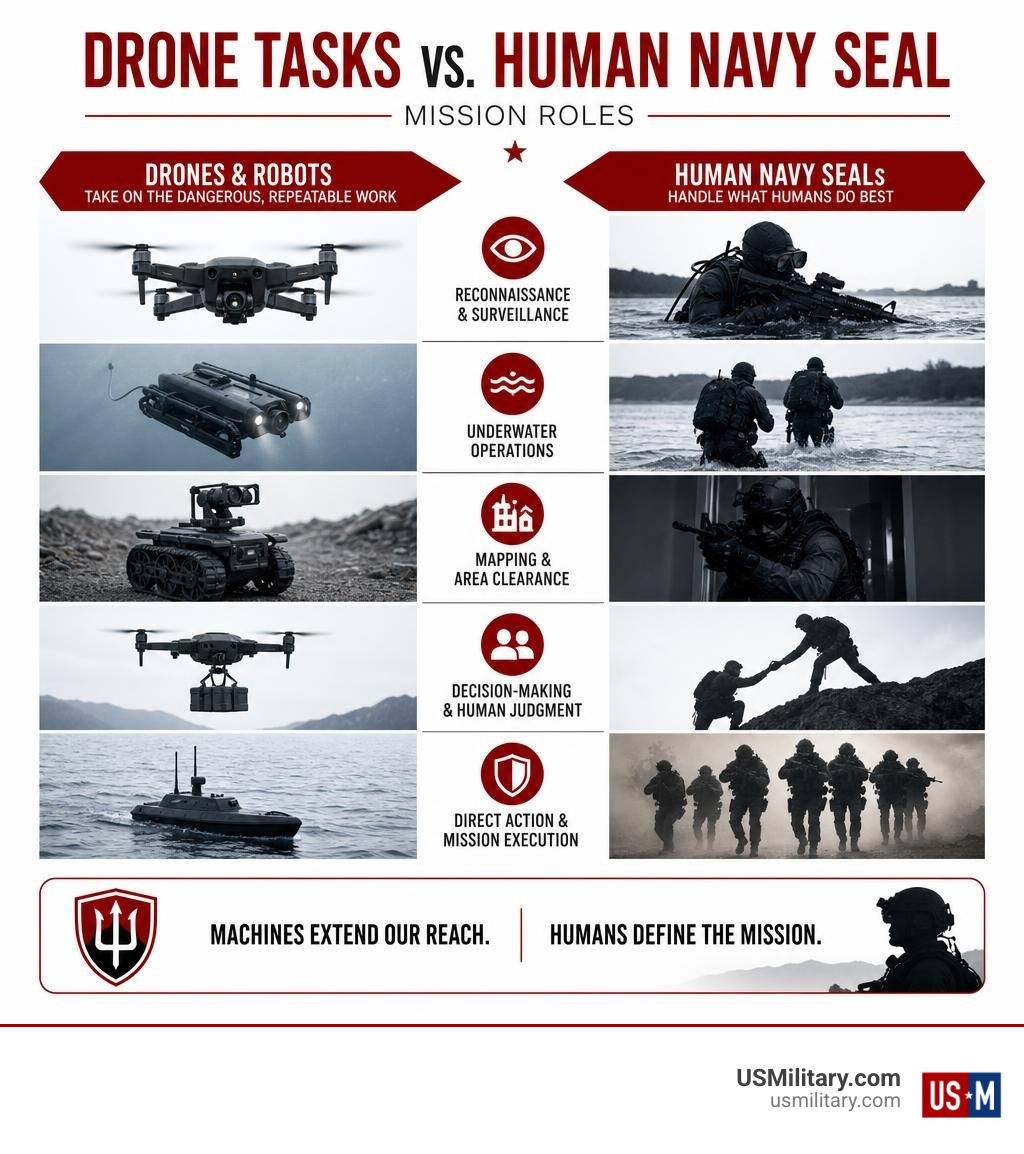
Drones and robots are unlikely to fully replace Navy SEALs anytime soon. They will take on more of the dangerous, repeatable work: scouting harbors, mapping buildings, finding mines, watching targets, and sometimes leading the first wave of an assault.
But missions such as hostage rescue, close-quarters combat, partner training, and split-second decisions around civilians still need human judgment. The real future is not fewer people with more gadgets. It is small special operations teams using unmanned air, surface, ground, and underwater systems to see farther, move safer, and act faster.
That shift is already underway. Autonomous drones can map indoor spaces before a team enters, while underwater vehicles can check routes and hazards before SEALs approach a shoreline. In Ukraine, drones have also shown how inexpensive, scalable systems can conduct strikes and even support unmanned ground assaults at a pace traditional forces cannot match.
For anyone asking, "In The Future Will Drones & Robots Replace Navy SEALs," the better question is: Which parts of a SEAL mission can a machine do first, and which still demand a person on scene?
I am LARRY FOWLER, BUD/S Class 89, publisher of NavySeal.com and the USMilitary.com Network since 2007, where I have helped active-duty members, veterans, and future service members understand changing military careers and service trends. As unmanned systems reshape the answer to In The Future Will Drones & Robots Replace Navy SEALs, the key is understanding how technology changes the operator's role rather than assuming elite human teams simply disappear.
Basic In The Future Will Drones & Robots Replace Navy SEALs glossary:
- Navy SEALs BUD/S Training Requirements
- Navy SEAL vs Delta Force: Elite Units Compared
- A Day In The Life Of A Navy SEAL Operator
In The Future Will Drones & Robots Replace Navy SEALs? The Technological and Operational Realities
When evaluating whether The Future of warfare is autonomous, it is tempting to look at modern combat footage and assume biological warfighters are obsolete. From low-cost aerial quadcopters to autonomous submersibles, machines execute high-risk tasks with astonishing precision. However, understanding what a Navy SEAL is reveals why autonomous systems cannot simply step in and replace an entire special warfare echelon.
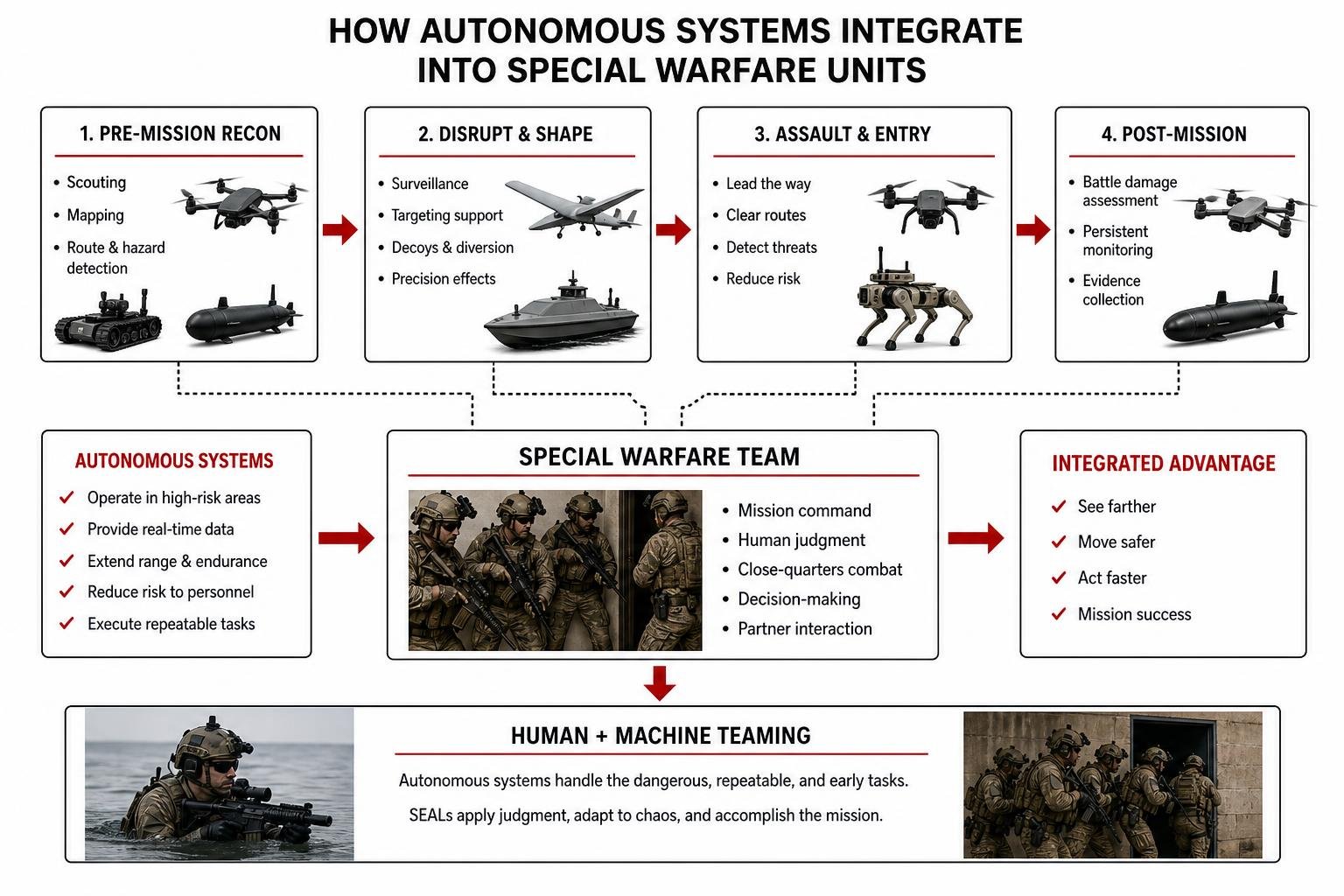
Special operations personnel operate at the intersection of extreme physical agility, ambiguous political contexts, and high-stakes moral decision-making. Drones excel at processing predefined algorithmic commands, recognizing geometric patterns, and operating in hazardous environments without risking life. Yet they remain brittle when confronted with dynamic battlefield chaos, novel environments, and unexpected human behavior.
Why in the Future Will Drones & Robots Replace Navy SEALs Arguments Fall Short in Direct Action
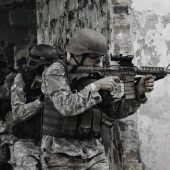
Direct action raids require instantaneous, complex problem-solving. In close-quarters battle (CQB), operators enter dynamic structures known in tactical parlance as the "fatal funnel"—the narrow entryways and doorways where defenders concentrate their fire. While clearing an interior, understanding what Navy SEALs do goes far beyond pulling triggers; operators must differentiate between non-combatant family members, surrendering combatants, hostages, and active threats in fractions of a second.
Silicon-based decision trees struggle with high-entropy scenarios. If an armed insurgent grabs a child as a human shield, an algorithm relying on computer vision faces significant target-classification challenges.
A machine cannot match the situational intuition, ethical restraint, and adaptive physical dexterity of a seasoned operator.
While a robotic platform can provide suppressive fire or breach an outer perimeter, trusting an autonomous algorithm with lethal target discrimination in a chaotic hostage rescue introduces unacceptable legal and tactical risks.
Technical Bottlenecks: Saltwater Physics, Jamming, and Comm Latency
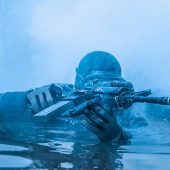
Beyond artificial intelligence, basic physical laws impose severe constraints on autonomous systems, particularly in maritime special operations. Radio frequency (RF) signals attenuate rapidly in saltwater. A surface drone or aerial quadcopter benefits from high-bandwidth satellite links, but once a machine dives beneath the waves, traditional communications evaporate.
To coordinate underwater drones, engineers must rely on acoustic communication or optical transceivers. Acoustic signals are slow, bandwidth-starved, and carry sound signatures that surrender stealth across ocean basins. Optical links require crystal-clear water and line-of-sight positioning, both rare along hostile coastlines. As a result, US mini-submarines loaded with Navy SEALs work with unmanned vehicles not as independently operating swarms, but as closely tethered tactical tools. When electronic warfare environments jam RF bands on land, uncrewed platforms lose connectivity with remote pilots, demanding human presence at the edge of the battlespace.
The Shift from Raids to Fleet Support: Human-Machine Teaming in Action
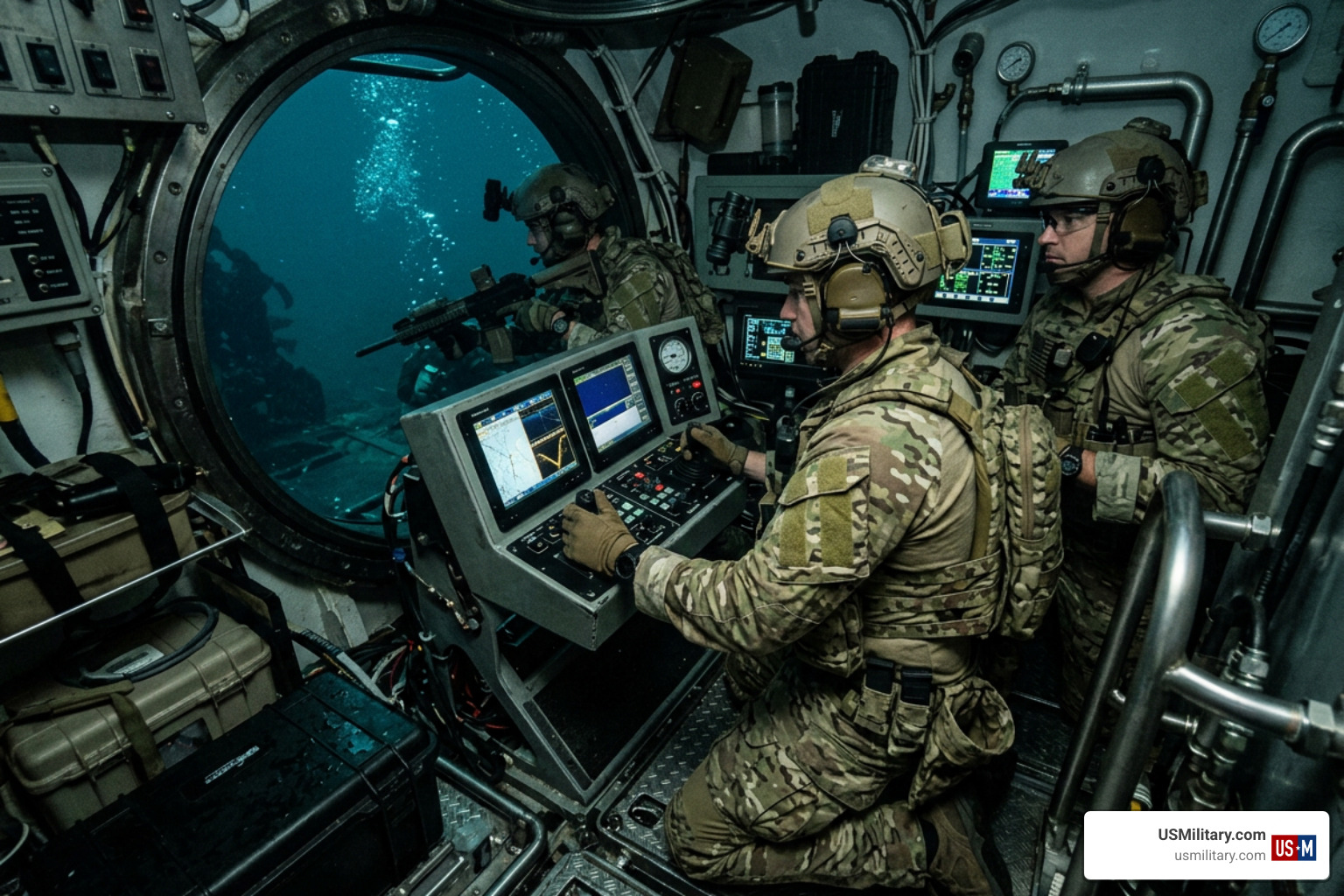
Naval Special Warfare is strategically pivoting from counterterrorism-centric direct action to supporting distributed maritime operations against peer adversaries. Integrating artificial intelligence military architectures allows SEAL platoons to serve as intelligence nodes, targeting spotters, and electromagnetic warfare coordinators for the broader naval fleet.
Modern coastal defense concepts demonstrate that The First Waves of Amphibious Assault Will Be Unmanned. Instead of sending human scouts onto heavily defended beaches to survey defensive obstacles, naval commanders deploy uncrewed surface vessels (USVs) and unmanned aerial vehicles (UAVs) to absorb initial strikes, locate radar emissions, and establish beachhead security.
Subsea Point Men: UUVs and SEAL Delivery Vehicles
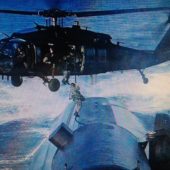
Clandestine maritime infiltration has evolved beyond wet submersibles operated by cold-soaked divers. The fielding of the Dry Combat Submersible (DCS)—a dry-interior mini-submarine capable of operating at depths down to 330 feet with two crew and eight operators—provides extended operational range without exhausting divers prior to insertion.
To clear approach lanes, the Navy pairs these vessels with autonomous robotic escorts. With robot wingmen swimming point for mini-subs, unmanned underwater vehicles (UUVs) such as the Razorback (a militarized REMUS 600) scout ahead to map ocean-floor topography, identify minefields, and detect acoustic sensors before the crewed mini-sub approaches.
Autonomous Interior Clearing: Shield AI and Tactical Hivemind
On land, indoor-capable autonomous systems are transforming the danger of building clearance. Shield AI's Nova quadcopter, powered by the Hivemind autonomy stack, operates without GPS, RF comms, or remote pilots.
The system navigates complex multi-story structures using onboard optical sensors and LiDAR:
- Maps interior floor plans autonomously at a rate of 2,000 square feet per minute.
- Identifies obstacles, structural layouts, and hostile occupants.
- Streams live telemetry to human operators positioned safely outside the breach point.
Rather than sending operators blind through a defended doorway, the machine clears the fatal funnel first, allowing the human assault team to plan and execute entries with complete spatial awareness.
Economic Attrition vs. Elite Human Capital: The Shifting Pentagon Strategy
Modern conflict has highlighted an asymmetric cost dynamic. In Eastern Europe, frontline forces logged 819,737 video-confirmed drone strikes in 2025 alone, with drones accounting for over 90% of tactical casualties in contested sectors. Inexpensive, first-person-view (FPV) strike drones assembled for $2,300 to $5,000 can destroy multi-million-dollar armored vehicles and defensive positions.
| Operational Metric | Elite Human SOF Unit (SEAL Platoon) | Scalable Unmanned Systems Fleet |
|---|---|---|
| Unit Cost Profile | Extremely High ($ Millions per operator lifecycle) | Low to Medium ($2,300 – $100,000 per asset) |
| Attrition Tolerance | Zero (Strategic/political liability on casualty) | High (Fully expendable and replaceable) |
| Mission Focus | Complex judgment, negotiation, precision raids | Persistent ISR, kinetic strike, route clearing |
| Replenishment Rate | Years of rigorous pipeline training | Days to weeks via industrial manufacturing |
| Domain Adaptability | High (Adapts dynamically across environments) | Narrow (Limited to coded software parameters) |
This economic disparity influences defense spending priorities. As defense leaders assess the strength of the US military, the objective is not to replace elite human capital with cheap drones, but to shield personnel from high-attrition, low-decision tasks.
The Operator as Mission Commander: New Military Roles
As technology evolves, the military operator's role is shifting from manual platform operator to autonomous fleet commander. In previous years, a single tactical drone required two to three operators—a pilot, a sensor operator, and a mission commander. Advanced autonomy inverts this ratio, allowing a single operator to supervise dozens of collaborative platforms.
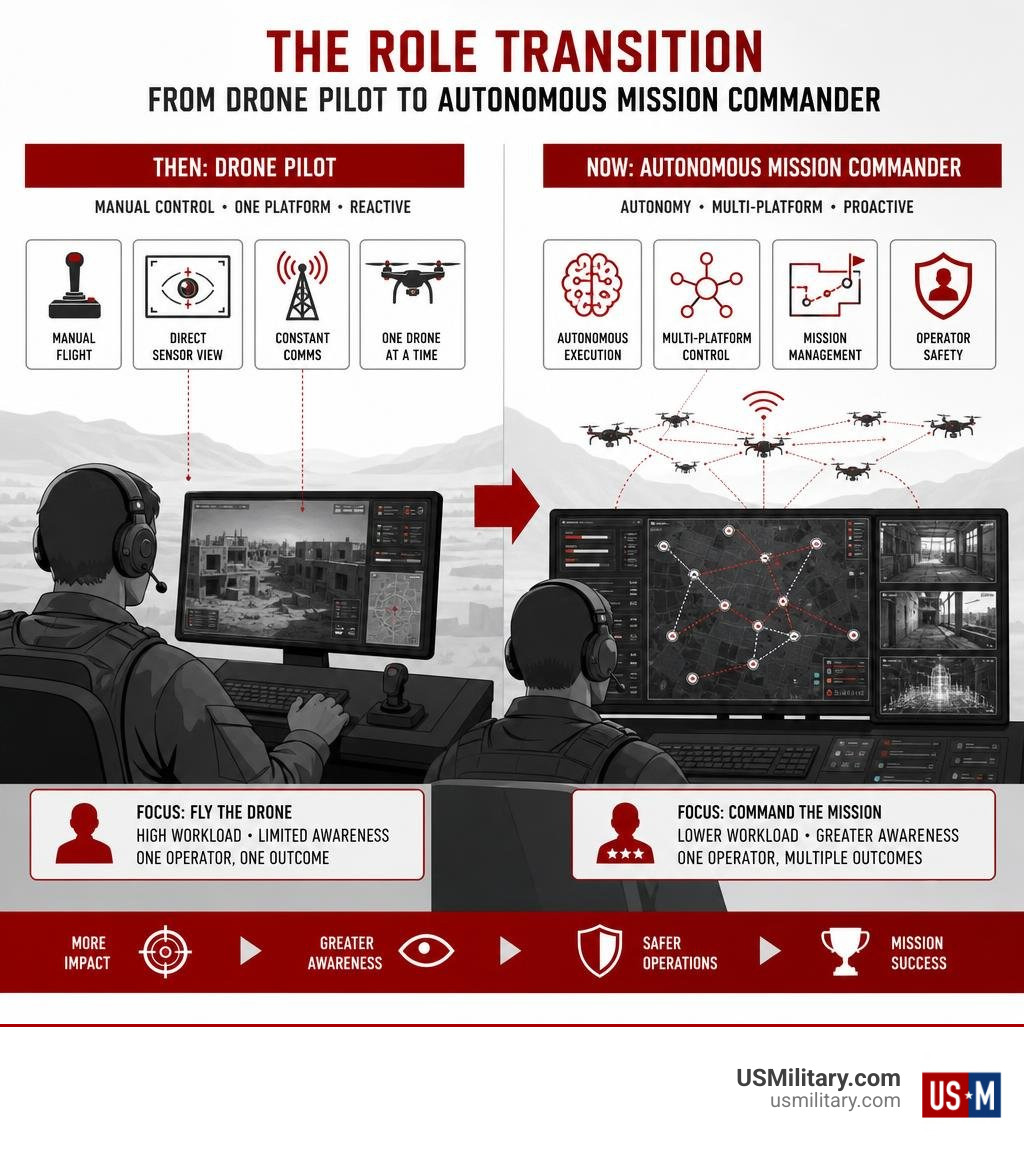
To support this operational shift, the Navy established the Robotics Warfare Specialist (RW) rating. These sailors manage autonomous systems across aerial, surface, and subsea domains. Similarly, dedicated Naval Special Warfare Unmanned Aircraft Systems (UAS) Troops provide specialized support, allowing a certified drone warfare pilot to coordinate uncrewed escorts while combat assault elements concentrate on core objectives.
In the Future, Will Drones & Robots Replace Navy SEALs or Simply Supercharge Human Operators?
The future of special warfare lies in hybrid capability. Giving an autonomous drone swarm to an untrained force does not produce an elite unit. Technology multiplies discipline, tactical judgment, and battlefield training; it does not replace them.
By integrating collaborative platforms, a twelve-person SEAL platoon gains the reconnaissance coverage of a battalion and the stand-off strike range of a naval battery. Drones shoulder the burden of visual surveillance, logistics delivery, perimeter security, and kinetic suppression, leaving human operators with the cognitive bandwidth to make critical, high-level decisions.
Timeline: What Drones Take Over First vs. What Stays Human
The evolution toward uncrewed systems follows a clear, mission-specific progression based on technological feasibility and human necessity.
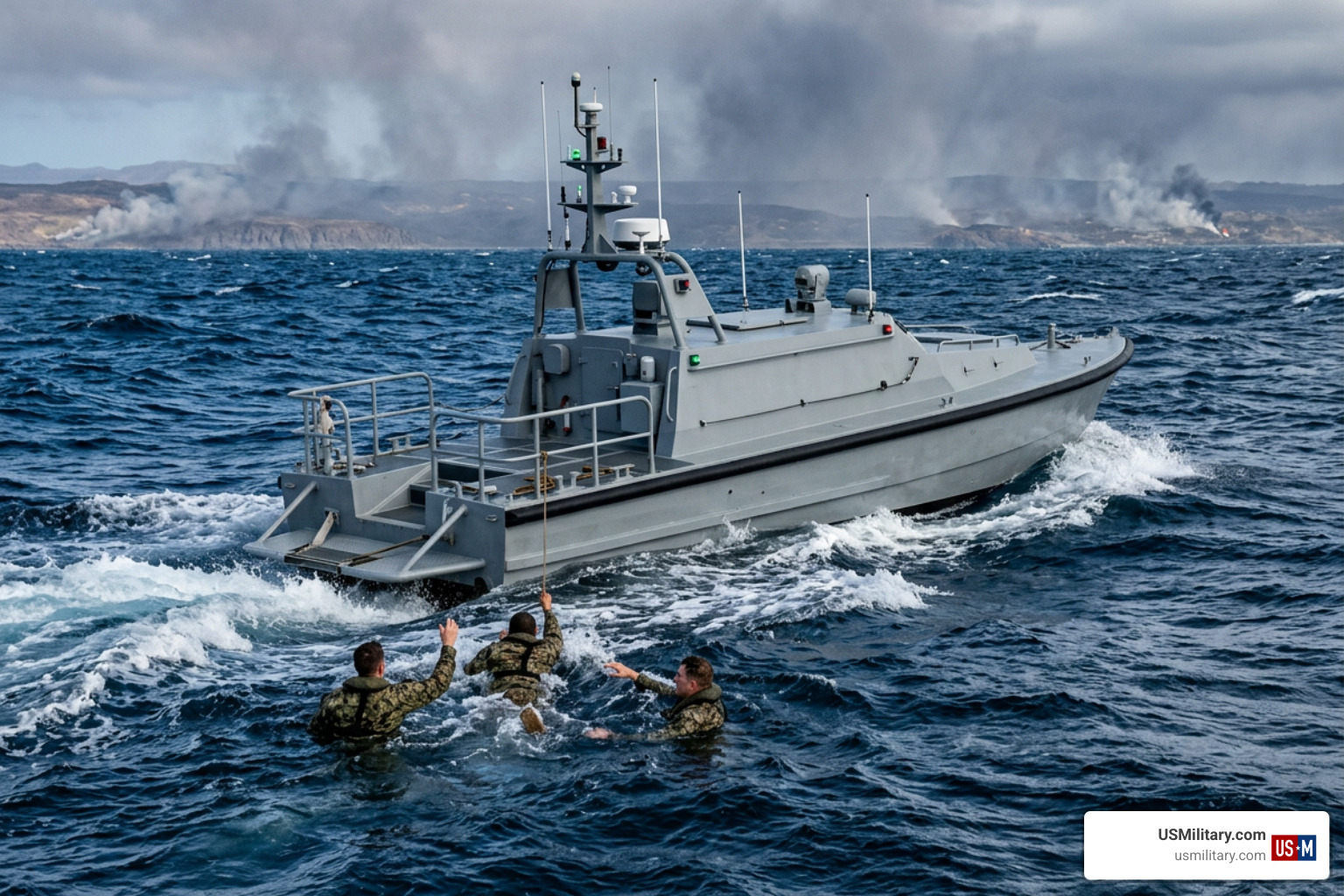
Recent maritime search-and-rescue operations showcase how uncrewed surface vessels (USVs) extract personnel under heavy fire, as highlighted when a Troop rescue near Iran points to rising use of sea drones in combat.
First Waves and Reconnaissance: 2026 to 2030
Between 2026 and 2030, autonomous systems are set to dominate specialized mission profiles:
- Hydrographic Beach Surveying: Unmanned underwater and surface drones will replace human scout swimmers for mapping coastal surf zones, tidal profiles, and shoreline obstacles.
- Harbor and Anchorage Reconnaissance: Autonomous micro-submersibles will identify hull attachments and sea-mine configurations without risking combat divers.
- Stand-off Electronic Warfare: Expendable aerial swarms will saturate enemy air defenses, jamming radar nodes to clear insertion corridors.
Irreplaceable Human Domains: Direct Action and Foreign Internal Defense
Certain mission sets will remain within the human domain indefinitely:
- Foreign Internal Defense (FID): Building alliances, mentoring partner nations, and advising foreign military units requires cultural fluency, emotional intelligence, and interpersonal trust that cannot be replicated by software.
- Sensitive Site Exploitation & Dynamic Interrogation: Navigating complex human terrain, understanding nuance during searches, and assessing real-time psychological cues require human cognition.
- Unconventional Warfare & Counter-Terrorism Raids: High-stakes missions characterized by high political exposure will always require human command and accountability. The rigorous Navy SEALs training pipeline prepares warfighters precisely for these high-ambiguity environments.
Frequently Asked Questions about Drones and Navy SEALs
Can drones autonomously clear buildings and rescue hostages without human intervention?
No. While systems like Shield AI's Nova can autonomously navigate and map interior structures, lethal engagement in hostage scenarios demands exceptional target discrimination. Distinguishing a hostage from an armed captor within fractions of a second in cluttered rooms remains beyond reliable algorithmic autonomy. Current Department of Defense policy mandates that human operators remain in the decision loop for lethal force.
How is the U.S. Navy training sailors to manage autonomous combat systems?
The Navy has established the Robotics Warfare Specialist (RW) rating, a dedicated career field focused on operating, maintaining, and deploying uncrewed aerial, surface, and undersea platforms. Candidates complete specialized technical pipelines alongside operational teams. Furthermore, modern Navy SEAL BUDs training curricula incorporate unmanned system operation and counter-drone fundamentals early in tactical development.
Will unmanned underwater vehicles replace SEAL Delivery Vehicles entirely?
No. Unmanned underwater vehicles (UUVs) lack the physical capacity, adaptive troubleshooting, and cargo flexibility required to conduct clandestine insertions of personnel and specialized equipment into denied areas. Instead, platforms like the Dry Combat Submersible operate alongside UUV point-men, using uncrewed systems for route reconnaissance and mine detection while the human insertion vehicle follows.
Conclusion
The rise of artificial intelligence, robotic ground platforms, and autonomous subsea craft does not signal the retirement of elite warfighters. Instead, it marks an evolution in how special operations are executed. Machines will handle routine surveillance, enter the most hazardous breach points first, and provide scalable kinetic firepower at a fraction of traditional operational costs.
Mastering human-machine teaming is the defining challenge of modern naval warfare. Operators who leverage autonomous networks to see through walls, clear underwater minefields, and project precision fires will dominate the battlefields of tomorrow. For more insights into Naval Special Warfare career paths, operational guidelines, and military advancements, explore our Navy SEAL complete guide.