The BUD/S Crucible: Understanding Standards, Attrition, and the Pipeline
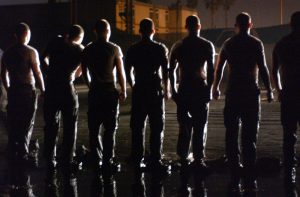
Basic Underwater Demolition/SEAL (BUD/S) training in Coronado, California, is widely regarded as one of the most grueling military selection courses in the world. Historically, BUD/S experiences an overall attrition rate between 70% and 80%, with only about 9.5% of men and women who begin the entire pipeline ultimately earning the coveted Special Warfare insignia (the Trident). In particularly notorious iterations, such as BUD/S Class 264, attrition reached an astounding 94%, graduating just 16 out of 256 starting candidates.
The pipeline spans over a year of consecutive high-stress screening and instruction:
- Navy Boot Camp (Great Lakes, IL): 8 weeks of initial military orientation.
- Naval Special Warfare Preparatory School (NSW Prep): 8 weeks of intensive physical conditioning, culminating in a Modified PST.
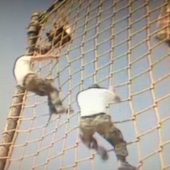
- BUD/S Orientation: 3 weeks introducing candidates to the Coronado obstacle course, surf passage, and conditioning routines.
- First Phase (Basic Conditioning): 7 weeks focusing on physical endurance, water competence, and Hell Week—a 5.5-day crucible where candidates log over 200 miles and sleep for roughly four total hours while running four meals spaced six hours apart. Hell Week alone accounts for the vast majority of voluntary Drop on Request (DOR) exits, where candidates ring the brass ship's bell three times.
- Second Phase (Combat Diving): 7 weeks dedicated to open-circuit SCUBA, closed-circuit oxygen rebreathers, and high-stress pool competency testing.
- Third Phase (Land Warfare): 7 weeks of marksmanship, demolitions, land navigation, and small-unit tactics on San Clemente Island.
- Post-BUD/S: 3 weeks of Basic Airborne School followed by 26 weeks of SEAL Qualification Training (SQT).
To earn a contract and survive this pipeline, you cannot train to the bare minimum standards. The table below illustrates the stark difference between what allows you to take the test and what gives you a statistical chance of finishing:
| PST Event | Minimum Navy Standard | Competitive Target Score | Optimal BUD/S Standard |
|---|---|---|---|
| 500-Yard Swim | 12:30 (Breast/CSS) | < 9:30 | < 8:30 (with CSS) |
| Push-ups (2 min) | 50 reps | 80–100 reps | 100+ reps (strict form) |
| Sit-ups (2 min) | 50 reps | 80–100 reps | 100+ reps |
| Pull-ups (no time limit) | 6 reps | 15–20 reps | 20+ dead-hang reps |
| 1.5-Mile Timed Run | 10:30 (sneakers) | < 9:30 | < 9:00 (in pants & boots) |

Understanding the gap between minimum requirements and competitive reality is essential. Candidates who arrive only meeting baseline standards are statistically the first to ring the bell when cold water, sleep deprivation, and relentless physical volume collide.
Want To Become a Navy SEAL? Here are 10 Skills You Should Master Before Going To BUD/S
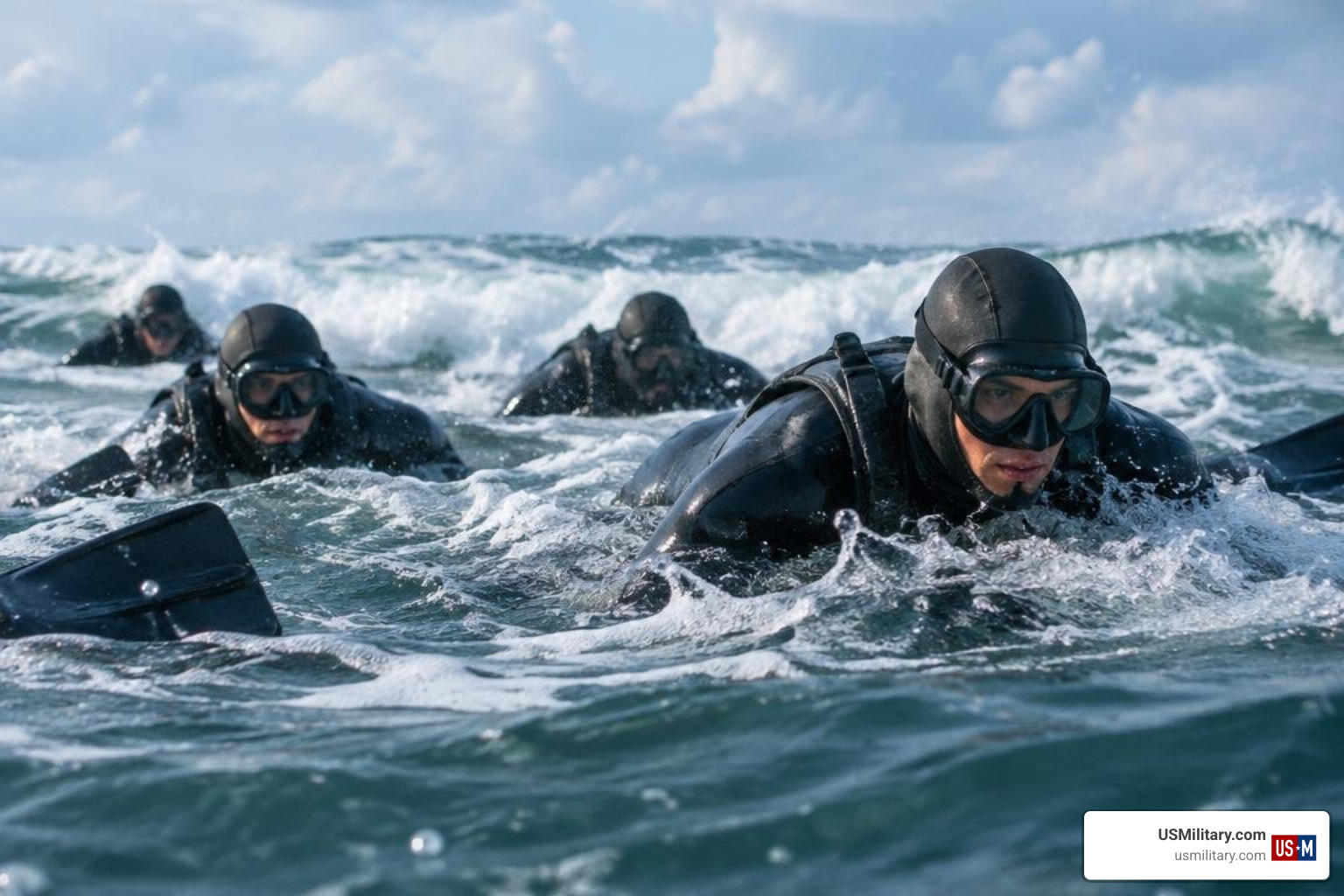
Operating in Naval Special Warfare demands tactical athleticism, extreme physical durability, and unwavering operational composure. To prepare effectively, prospects must master these ten distinct physical and mental disciplines before setting foot in Coronado.
Physical Benchmarks: Want To Become a Navy SEAL? Here are 10 Skills You Should Master Before Going To BUD/S
1. Mastering the Combat Swimmer Stroke (CSS)
The CSS combines elements of the sidestroke, breaststroke, and freestyle into an energy-efficient, low-profile swimming technique. While traditional strokes generate drag and burn glycogen rapidly, mastering the scissor kick, streamlined glide, and bilateral breathing of the CSS allows candidates to swim 500 yards in under 9:00 without redlining their heart rate. Focus on total-body alignment and holding the glide phase for 2 to 3 seconds per stroke.
2. Open-Water Ocean Swimming with Fins
At BUD/S, candidates complete weekly timed two-mile ocean swims wearing Rocket Fins or Duck Feet. Swimming long distances with stiff fins places enormous strain on the ankles, calves, and hip flexors. Prospective candidates must build up to 2,000–4,000 meters of weekly finning to avoid debilitating shin splints and foot cramps in cold ocean currents.
3. High-Mileage Running in Boots and Soft Sand
Tarmac running in cushioned sneakers does not translate to running on Coronado's soft, uneven sand wearing Bates or Danner boots. Weekly training must progress to 25–35 miles of mixed-surface conditioning, including 4-mile timed runs at a sub-28:00 pace. Conditioning the connective tissues in your lower legs prevents stress fractures and plantar fasciitis.
4. High-Volume Calisthenics and Core Endurance
The grinder demands thousands of push-ups, dips, pull-ups, and abdominal repetitions every week. Core strength is tested through punishing sets of 4-count flutter kicks—often performed on wet sand while holding a 6-inch leg raise for extended periods. Candidates must condition their hip flexors and lower back to complete 100-rep continuous flutter kick sets without dropping their heels.
5. Functional Durability and Grip Strength Over Muscle Bulk
Bodybuilding hypertrophy increases body mass, which creates severe oxygen debt during long runs and ocean swims. BUD/S requires high functional power-to-weight ratio and elite grip strength. Carrying 200-pound logs during Log PT and hauling 150-pound IBS (Inflatable Boat Small) craft overhead demands formidable forearm endurance, trap stability, and rotational core strength. Emphasize pull-up variations, towel hangs, farmer carries, and sandbag work over heavy bench pressing.
Mental Resilience: Want To Become a Navy SEAL? Here are 10 Skills You Should Master Before Going To BUD/S
6. 4x4 Box Breathing and Arousal Control
When instructors induce chaos, adrenaline triggers a fight-or-flight response that drains cognitive performance. Candidates must master box breathing (inhale 4 seconds, hold 4 seconds, exhale 4 seconds, hold 4 seconds) to stimulate the parasympathetic nervous system, lowering heart rate and suppressing cortisol spikes during high-stress evolutions.
7. Micro-Goal Setting and Intentional Disassociation
During Hell Week, looking ahead to the end of the week will break you mentally. Successful candidates divide their reality into micro-goals: making it to the next sunrise, the next chow hall meal (spaced six hours apart), or the next log repetition. When physical discomfort peaks, practicing intentional disassociation—focusing intently on external environmental cues, rhythm, or internal humor—prevents the mind from fixating on physical pain.
8. Positive Self-Talk and the 40% Rule
When severe fatigue sets in, the brain attempts to protect the body by sending overwhelming signals to quit. Research and operator experience demonstrate the "40% Rule"—when your mind tells you you are completely exhausted, your body has only tapped roughly 40% of its actual physical reserve. Replacing negative internal dialogue with clear, affirming operational statements prevents mental collapse when freezing in the surf.
9. Underwater Composure and Pool Competency
Phase 2 Combat Diving requires complete comfort in zero-visibility conditions with restricted oxygen. Evolutions like drownproofing (swimming, bobbing, and flipping with hands and feet tied) and pool competency (managing tangled regulator hoses while instructors simulate underwater gear attacks) test psychological composure. Panic is the primary cause of pool failure; candidates must master the ability to suppress survival panic underwater.
10. The Swim Buddy Principle and Team-First Mindset
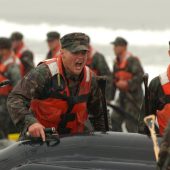
In Naval Special Warfare, the individual does not exist—the team does. Candidates who operate as "lone wolves" quickly fail out during boat crew evolutions. You must constantly monitor your swim buddy, share the physical load during boat and log carries, and place your crew's welfare above your personal comfort. When physical resources run dry, embracing the shared misery with dark humor binds boat crews together and builds unbreakable team resilience.
Designing Your Long-Term BUD/S Preparation Timeline and Periodization
Developing tactical athleticism requires a structured 12-to-24 month periodized training plan rather than a hasty multi-week blitz.
During this preparatory window, prospective sailors must also satisfy administrative and cognitive benchmarks:
- ASVAB Requirements: Must achieve a qualifying score on the Armed Services Vocational Aptitude Battery. Required line scores include
GS + MC + EI = 170orVE + MK + MC + CS = 220(withVE + AR = 110andMC = 50). - C-SORT Screening: Complete the Computerized Special Operations Resilience Test, which evaluates psychological hardiness, stress tolerance, and mental flexibility.
- Enlisted vs. Officer Pathways: Enlisted candidates secure a SEAL Challenge Contract (SO rating) via recruit division testing. Officer applicants face an exceptionally competitive pipeline (70–80 slots per year compared to 700–800 enlisted), requiring selection through USNA, NROTC, or OCS, followed by the rigorous SEAL Officer Assessment and Selection (SOAS) course.
Nutrition, Recovery, and Injury Prevention for Tactical Athletes
Operating as a high-performance tactical athlete requires treating nutrition and recovery with the same seriousness as physical conditioning.
- Caloric and Macronutrient Fueling: Candidates burn between 3,500 and 4,000 calories daily during heavy training (and up to 6,000–8,000 during selection evolutions). Fuel your base phase with 50–65% complex carbohydrates to maintain glycogen levels, 20–25% lean protein (1.0–1.2g per pound of bodyweight) for muscle tissue repair, and healthy fats for hormonal stability.
- Hydration Protocols: Drink between 3 to 4 quarts of clean water daily, supplemented with essential electrolytes (sodium, magnesium, and potassium) to prevent cramping during high-heat or high-volume sweating sessions.
- Lower-Limb Injury Prevention: Overuse injuries such as shin splints, Achilles tendonitis, and stress fractures are leading causes of training rollbacks. Increase running mileage by no more than 10% per week. Regularly mobilize the calf muscles, plantar fascia, and IT bands using foam rollers and targeted stretching.
- Shoulder Health: The massive volume of swimming, push-ups, and overhead boat carries places extreme stress on the rotator cuff. Incorporate daily scapular retraction drills, face pulls, and band pull-aparts to balance shoulder posture.
- Sleep Hygiene and Thermal Conditioning: Prioritize 8 to 9 hours of quality sleep during your civilian preparation to allow tissue recovery and central nervous system repair. Inoculate yourself to environmental cold through contrast showers and cold-water immersion, focusing on controlling your respiratory rate.
Frequently Asked Questions About Preparing for BUD/S
What is the actual attrition rate for candidates at BUD/S?
The overall attrition rate at BUD/S typically ranges between 70% and 80%, with roughly 65% to 75% of drops occurring during Phase 1. The single largest point of departure is Hell Week, which routinely eliminates the majority of the remaining class through voluntary Drop on Request (DOR) or medical rollbacks (such as stress fractures or pneumonia).
How long should I train before taking the official PST and enlisting?
Most candidates without an extensive competitive endurance background need 12 to 24 months of periodized training. If you already have a collegiate swimming or cross-country background, 6 to 12 months of targeted calisthenics, boot running, and rucking may suffice to correct athletic imbalances and reach competitive scores.
Can heavy weightlifting replace high-volume calisthenics during pre-BUD/S prep?
No. While baseline strength is necessary for carrying logs and boats, excessive muscle mass increases oxygen consumption and impairs endurance during high-mileage runs and multi-mile swims. BUD/S prioritizes muscular endurance, core stamina, and power-to-weight ratio over one-rep maximum lifting capacity.
Conclusion
Earning the Navy SEAL Trident requires far more than physical strength—it demands deep mental tenacity, emotional control, and an absolute refusal to quit. By systematically mastering these ten foundational skills, balancing your cardiovascular endurance with functional power, and conditioning your mind to stay composed under pressure, you give yourself the tools needed to survive the grinder.
At USMilitary.com, we provide prospective service members with the resources, training frameworks, and career insights needed to navigate military selection. To explore career paths, benefit structures, and detailed pipeline guides across every branch of service, check out our Navy SEALs complete guide and take the first step toward your military objectives. Explore our central hub at USMilitary.com for complete guidance on your service journey, and read Dare to Live Greatly to build the mental and spiritual foundations required for elite performance.
For further reading on preparing for Naval Special Warfare:
- 15 Die Hard Habits Becoming a Navy SEAL
- How To Become a Navy SEAL in 2026
- How To Best Prepare For BUD/S: Physically & Mentally
- What is Navy SEAL BUD/S Training in Coronado CA?
- Is Becoming a Navy SEAL Actually Within Your Reach
- 10 All-Important Questions Every Navy SEAL Prospect Should Ask Before Going To BUD/S
- Six Tips To Mentally Prepare for Navy SEAL Training
- What's the best training program for BUD/S Prep?
- Navy SEAL Training Program PDF: 12-Week BUD/S Prep