Do BUD/S Instructors Want Trainees to Cheat? The Short Answer
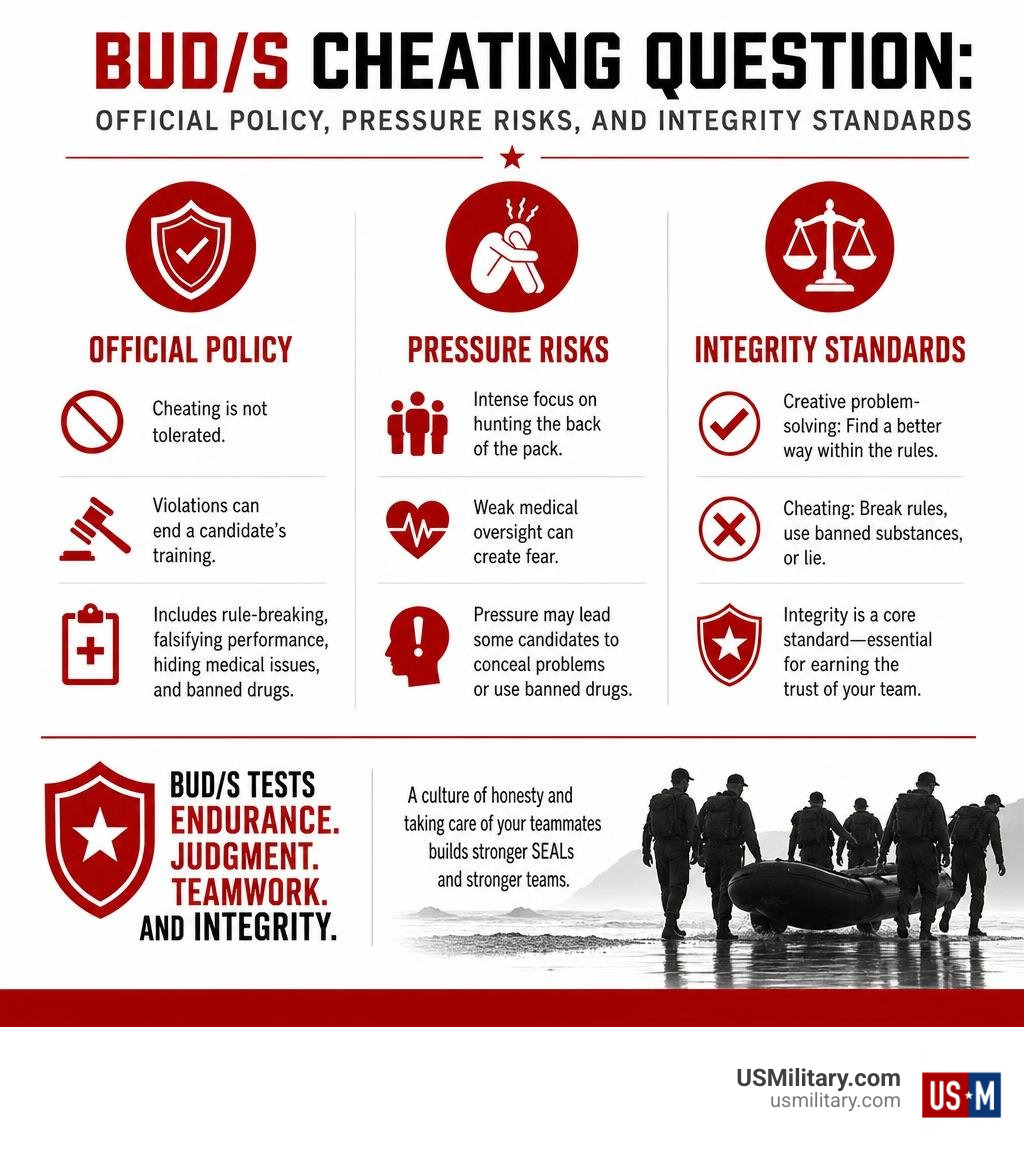
No. Navy SEAL BUD/S instructors are not supposed to want trainees to cheat, and cheating can end a candidate's training. That includes falsifying times or repetitions, breaking course rules, hiding serious medical symptoms, or using performance-enhancing drugs.
However, if a SEAL is captured, they will have to be able to cheat, lie, steal, or whatever it takes to escape. This requires intellectual creativity over and beyond any rules established by the enemy. This kind of cheating is not only acceptable but necessary. However, there's another kind of cheating that has taken root in BUD/S, like banned drug enhancers.
But official investigations after the 2022 death of SEAL candidate Kyle Mullen found a training culture in which some instructors focused heavily on "hunting the back of the pack." Combined with weak medical oversight and intense fear of being dropped, that pressure may have led some candidates to believe they needed to conceal problems or use banned drugs to survive.
The key distinction is simple:
- Creative problem-solving: Finding a safer or smarter solution while following the rules.
- Cheating: Secretly breaking rules, using banned substances, or lying about performance or health.
- Instructor pressure: Never a justification for misconduct, but a real factor leaders must manage.
BUD/S has long had high attrition, historically near 68%. The program is designed to test endurance, judgment, teamwork, and integrity - not merely pain tolerance. A system that makes candidates afraid to report illness or seek care risks selecting for concealment instead of the trust required in a SEAL platoon.
I am Larry Fowler, BUD/S Class 89, publisher of NavySeal.com and the USMilitary.com Network since 2007, where I have helped active-duty members, veterans, and prospective recruits sort through difficult military-service questions. In examining Do Navy SEAL BUD/S Instructors Secretly Want Trainees To Cheat?, my focus is on separating documented leadership failures and candidate pressure from the Navy's stated standard of personal integrity.
Do Navy SEAL BUD/S Instructors Secretly Want Trainees To Cheat? Vocab explained:
- Navy SEALs BUD/S Training Requirements
- What Navy SEAL BUD/S Training Taught Me About Self-Confidence, Courage, & Faith
- What is Navy SEAL Training 3 Phases And Why is it so tough
The Culture of Selection: "Hunt the Back of the Pack" Mentality
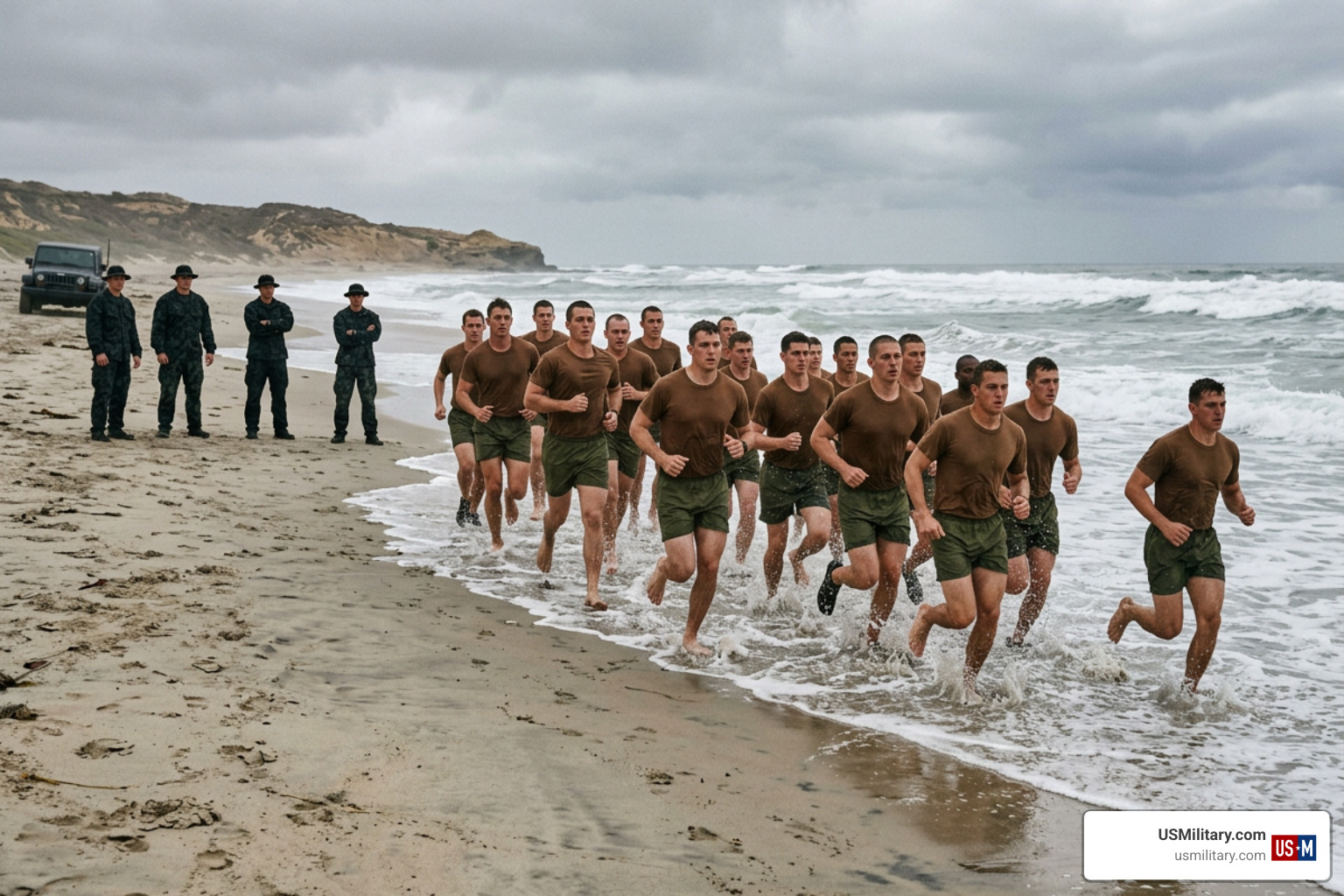
Basic Underwater Demolition/SEAL (BUD/S) selection represents the gateway to Naval Special Warfare. The six-month ordeal at the Naval Special Warfare Center in Coronado, California, is designed to separate individuals who break under catastrophic stress from those who can maintain absolute operational focus. As outlined in The Ultimate Guide to Navy SEAL Training 3 Phases and Why Is It So Tough, Phase 1: Basic Conditioning presents an unrelenting crucible where instructors apply acute physical and psychological pressure.
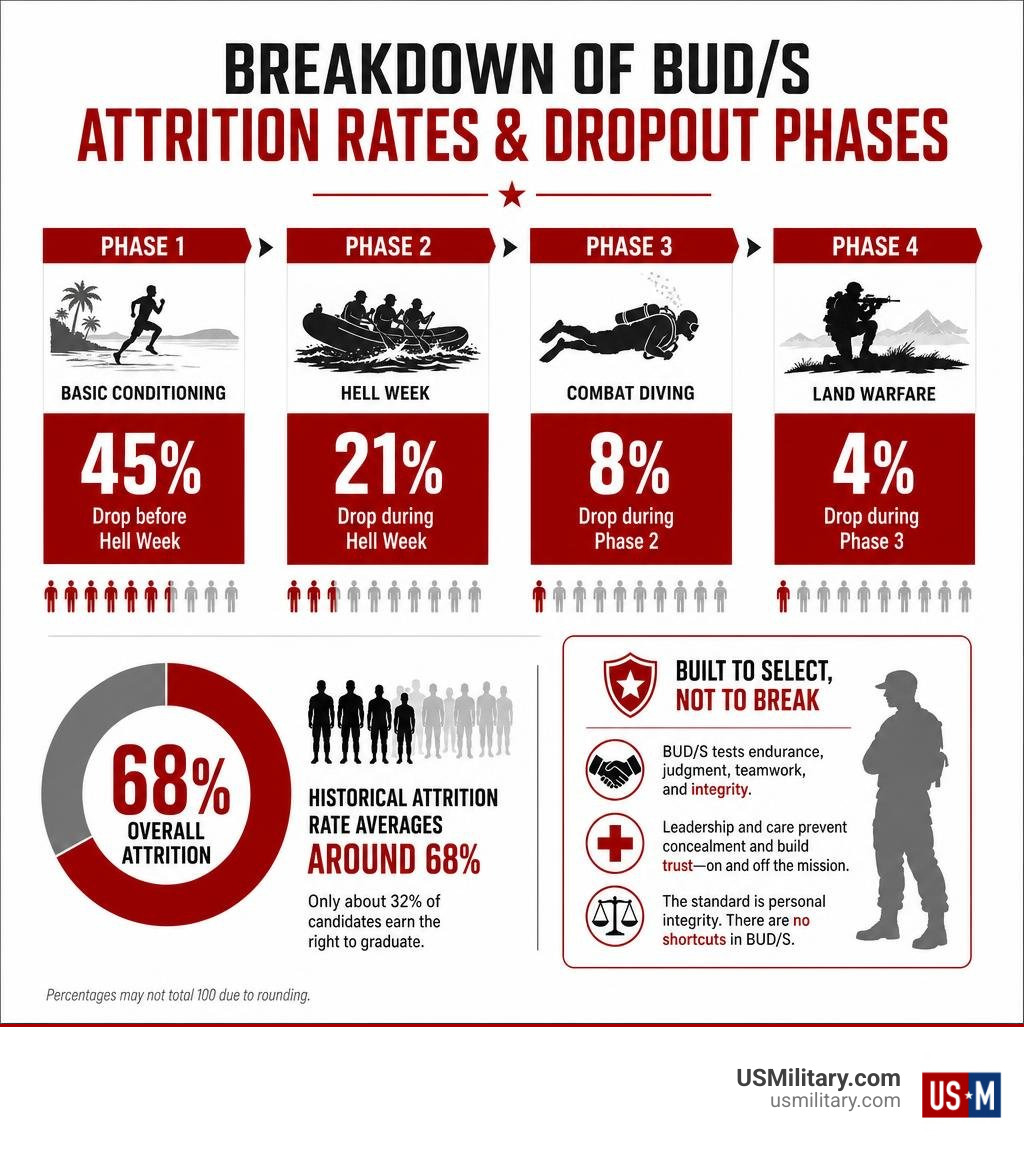
Historical Attrition Pressures and First-Phase Drop Rates
The historical attrition rate of BUD/S has hovered around 68% for over 80 years, tracing back to the Naval Combat Demolition Units (NCDU) of 1943. Statistically, 45% of an incoming class drops out before Hell Week even begins, while 21% exit during Hell Week, and only 8% drop during Phase 2 (Combat Diving) and Phase 3 (Land Warfare).
Meeting every standard outlined in the Navy SEAL BUD/S Training Requirements Guide demands peak physical readiness. However, between 2021 and 2022, an alarming anomaly occurred: First Phase attrition spiked to nearly one in two candidates quitting or being dropped (approaching 50%), compared to the historical baseline of roughly one in three. This surge overwhelmed holding platoons and signaled structural dysfunction inside the training pipeline.
Examining the Culture: Do Navy SEAL BUD/S Instructors Secretly Want Trainees To Cheat?
When First Phase attrition spiked, leadership attributed the failures to a perceived decline in mental toughness among newer generations of recruits. In response, a subset of the instructor cadre adopted an aggressive mindset termed "hunting the back of the pack." Rather than evaluating candidates against established objective benchmarks, instructors disproportionately targeted struggling candidates at the rear of runs, ocean swims, and log physical training drills to force attrition.
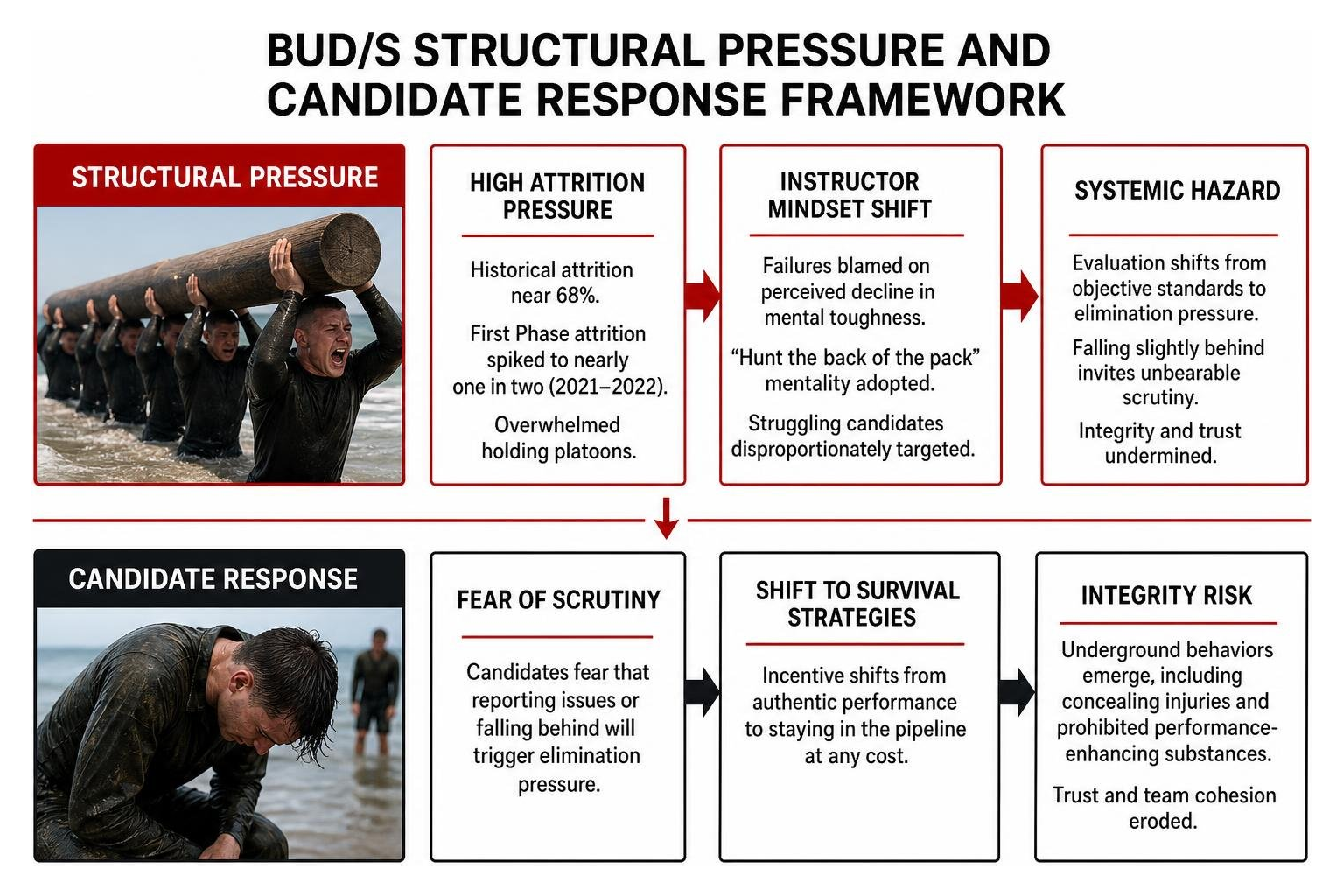
A comprehensive Investigation finds multiple problems with 'Hell Week' after SEAL candidate training death - ABC News revealed that this climate created a systemic hazard. When candidates realized that falling slightly behind invited unbearable scrutiny, the incentive structure shifted from authentic performance to underground survival strategies, including clandestine medical concealment and prohibited performance-enhancing substances.
Do Navy SEAL BUD/S Instructors Secretly Want Trainees To Cheat?
To answer this question accurately, we must dissect the operational philosophy of Naval Special Warfare versus the folklore propagated by outside observers.
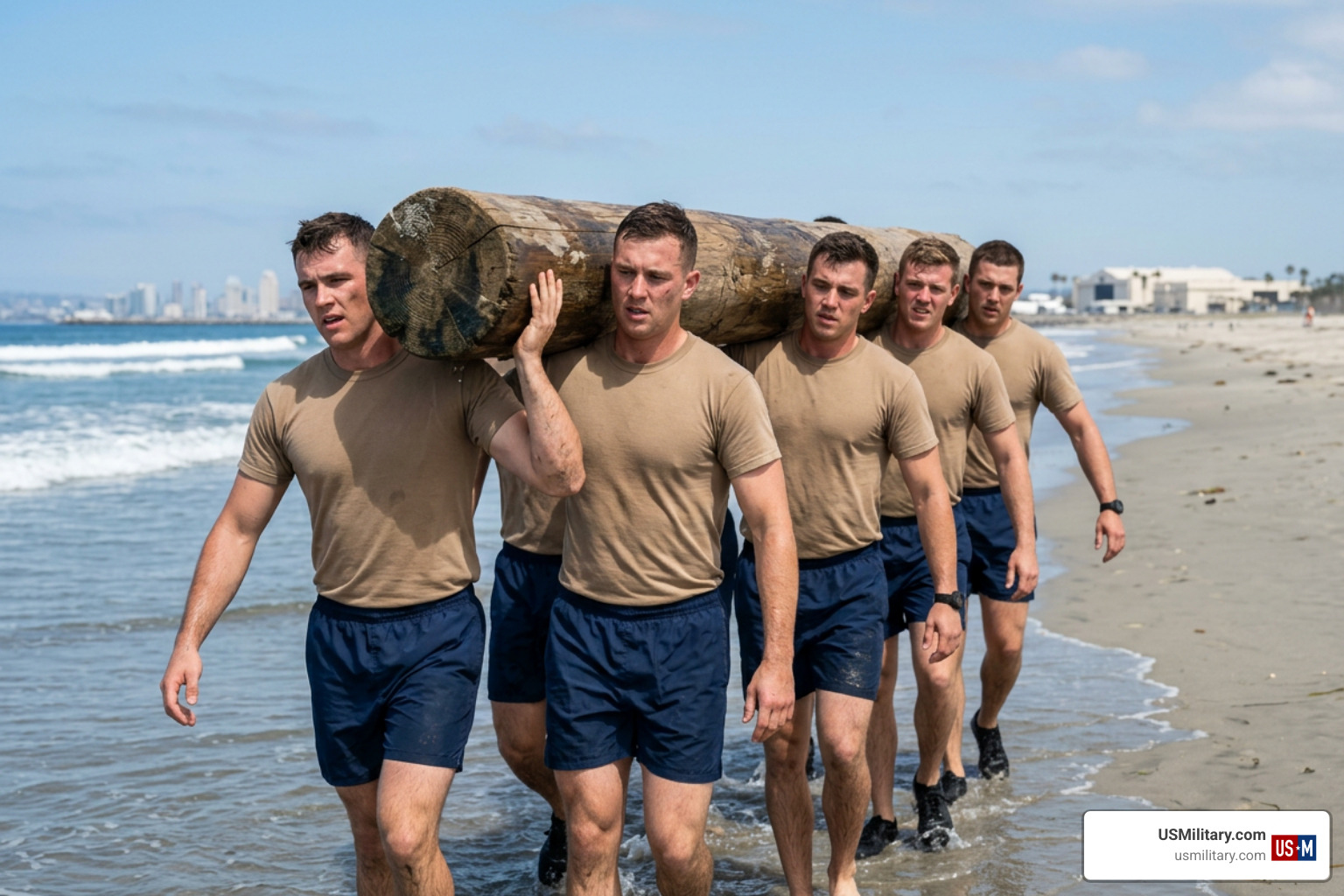
Creative Problem-Solving vs. Blatant Integrity Violations
There is a vast difference between tactical innovation and cheating. Instructors consistently encourage creative problem-solving—often called "working smarter, not harder"—provided it operates within designated safety parameters and explicit rules:
- Legitimate Creative Problem-Solving: Rearranging boat crew positions based on individual heights to balance log weight, refining swim stroke cadences to conserve energy, or optimizing equipment packing orders to speed up transitions.
- Integrity Violations (Cheating): Cutting corners on a timed 4-mile run, having another candidate perform repetitions, removing required safety ballasts from dive rigs, modifying jungle boots by cutting out structural steel shanks, or injecting anabolic steroids.
Naval Special Warfare requires uncompromising integrity. Candidates who attempt to skip repetitions or fabricate times on the obstacle course are not rewarded for cleverness—they are instantly dismissed from the training pipeline. Understanding Beyond the Basics Unpacking Navy SEAL Requirements and Selection shows that mission success on the battlefield relies on verified capability, not unearned shortcuts.
The "If You Ain't Cheating, You Ain't Trying" Special Ops Misconception
The phrase "If you ain't cheating, you ain't trying" is often tossed around in military circles. In a high-stakes combat environment against a hostile enemy, special operators will leverage every asymmetric advantage, deception tactic, and technological workaround possible to win and bring their team home alive.
However, applying that tactical combat mindset to BUD/S selection is fundamentally flawed. Among the 10 Top Die Hard Secrets Navy SEALs Keep to Themselves is that teammate trust is paramount. If a candidate cheats during selection, their peers and instructors know that person cannot be trusted on a clandestine real-world operation where cutting corners results in catastrophic mission failure or loss of life. Instructors do not secretly want candidates to cheat; they test candidates under severe exhaustion specifically to discover if their integrity remains intact when nobody is looking.
Performance-Enhancing Drugs, SIPE, and the Underground Survival Trade
The intersection of extreme physical punishment and fear of failure historically fueled an illicit black market inside the candidate barracks.
The Root Drivers: Why Trainees Turn to PEDs and Concealed Illness
BUD/S places extreme demands on human physiology. Under sustained cold-water immersion, multi-mile soft-sand runs, and severe sleep deprivation, candidates face profound muscle degradation, rhabdomyolysis, and Swimming-Induced Pulmonary Edema (SIPE). Candidates preparing for this challenge must review the 7 Big-Time Questions to Ask Before BUD/S to understand these extreme physiological hazards.
Following the tragic death of 24-year-old Seaman Kyle Mullen—a former Yale football captain who died from acute bacterial pneumonia shortly after completing Hell Week in 2022—investigators uncovered testosterone and Human Growth Hormone (HGH) in his personal vehicle. While Mullen's blood could not be tested post-mortem directly, two other candidates in his class tested positive for performance-enhancing drugs (PEDs), and 20 others were placed under administrative investigation.
Between February 2022 and March 2023, the Navy conducted 2,558 hormone screenings across candidates:
- 74 candidates exhibited elevated testosterone levels.
- 3 candidates tested positive for banned anabolic substances.
Historically, Naval Special Warfare Command requested permission from the Department of the Navy to conduct random PED testing in 2011 and 2018, but both requests were denied due to administrative and legal barriers. Without proactive drug testing, an underground survival culture developed among desperate candidates attempting to accelerate tissue repair and ward off debilitating physical collapse.
Post-2022 Reforms: Forcewide Urinalysis and Enhanced Medical Care
To eliminate illicit drug use and address the root drivers of candidate secrecy, Naval Special Warfare instituted major procedural reforms:
- Forcewide Random Urinalysis: Commencing in November 2023 and continuing through September 2026, the Navy tests 15% of all SEAL and recruit unit populations monthly for PEDs, alongside targeted unit sweeps.
- Standardized Diagnostic Thresholds: The Navy adopted the World Anti-Doping Agency (WADA), NCAA, and Olympic threshold—a 4:1 testosterone-to-epitestosterone (T/E) ratio (normal male baseline is 1:1). This standard delivers a 95% detection accuracy while allowing follow-up testing for the ~5% of individuals who naturally carry elevated baseline ratios.
- Medical Cultural Overhaul: Candidate medical clinics were decoupled from punitive training oversight. Post-Hell Week candidates now undergo mandatory 24-hour continuous vital sign monitoring, pulse oximetry, and clinical screening for pulmonary edema before release to the barracks.
These comprehensive interventions yielded immediate results: since March 2023, only 3 out of 434 candidates (0.69%) have tested positive for banned substances, demonstrating that consistent oversight effectively dismantles illicit drug pipelines.
Evolution of BUD/S: Cowboy Era vs. Modern Regulated Selection
The modern selection course represents a massive departure from the training environments of previous generations.
From Unchecked Hazing to Scientific Misery
Decades ago, during what veterans refer to as the "Cowboy Era," individual instructors operated with near-total autonomy. Punishment was frequently arbitrary, medical oversight was sparse, and instructors could unilaterally drop students through targeted physical attrition.
Today, arbitrary abuse has been replaced by standardized, scientifically regulated physical exertion. The standards have not become easier; rather, the Physical Screening Test (PST) benchmarks have become significantly more demanding over the past fifty years:
| Metric / Parameter | 1970s Cowboy Era | Modern Selection (2026) |
|---|---|---|
| 500-Yard Swim | Under 10:00 minutes | Under 8:00 minutes |
| Push-ups (2 min) | 60+ reps | 100+ reps |
| Pull-ups | 10+ reps | 20+ reps |
| 1.5-Mile Run | Under 11:00 minutes | Under 9:00 minutes |
| Instructor Oversight | Unchecked cadre autonomy | Standardized rubrics & safety officers |
| Medical Monitoring | Minimal; self-care culture | Continuous vitals, SIPE checks, dedicated MDs |
| Drug Deterrence | Zero testing | Monthly 15% random urinalysis & sweeps |
By grounding the curriculum in sports science and transparent standard operating procedures, instructors can rigorously test mental fortitude without creating an environment that incentivizes candidates to conceal critical injuries or break training rules.
What Naval Special Warfare Leadership Demands in 2026
Naval Special Warfare Command demands that instructors embody the SEAL Ethos. Selection is not designed to break rules; it is designed to forge operators who uphold the highest ethical standards under extreme pressure. Instructors are certified through structured training pipelines, ensuring that the legendary 68% attrition rate reflects genuine physical and mental qualification rather than systemic abuse or unchecked cadre behavior.
Frequently Asked Questions About BUD/S Rules and Integrity
Do Navy SEAL BUD/S Instructors Secretly Want Trainees To Cheat?
No. BUD/S instructors evaluate a candidate's character, stress tolerance, and dedication to the team. Attempting to cheat on timed runs, obstacle course benchmarks, repetition counts, or gear inspections results in immediate dismissal from the course with a permanent loss of special operations qualification designators.
What Happens if a Trainee Tests Positive for PEDs at BUD/S?
A positive PED urinalysis triggers an immediate administrative hold, secondary confirmation testing, and initiation of administrative separation from the United States Navy. Candidates flagged with elevated T/E ratios above 4:1 undergo specialized medical evaluation to determine whether the reading is biological or synthetic. Confirmed illicit use results in immediate removal from the military.
How Did Medical Oversight Change After the 2022 Hell Week Investigation?
Medical reforms following the 2022 investigation include:
- Mandatory 24-hour medical observation following the conclusion of Hell Week.
- Routine blood oxygen, pulmonary, and cardiac evaluations for all candidates reporting respiratory distress.
- Free access to external medical facilities without fear of immediate administrative dropping.
- Integration of independent medical officers who possess unilateral authority to halt training events for candidate safety.
Conclusion
The high-stress crucible of BUD/S exists to prepare warfighters for the world's most unforgiving combat environments. While historical breakdowns in leadership and medical care created high-risk environments where some candidates turned to illicit substances or concealed life-threatening illnesses, Naval Special Warfare has reinforced its foundational standard: integrity is non-negotiable.
Instructors do not want candidates to cheat; they want operators who possess the resilience to conquer adversity honestly. If you are preparing for the ultimate military challenge, explore our Navy SEALs Complete Guide to learn about recruitment pipelines, fitness benchmarks, and military career strategies at USMilitary.com.